
Cabinet Resurfacing vs. Refacing vs. Refinishing: What's the Actual Difference?
New cabinets, or even just updated ones, can totally change how a space feels. But figuring out the right way to update them? That part trips people up. Cabinet resurfacing, cabinet refacing, cabinet refinishing – you'll see these terms tossed around like they're the same thing, and honestly, most of the time nobody bothers to explain that they're not. So homeowners across the Twin Cities end up picking whatever sounds familiar, and it doesn't always line up with their budget, their goals, or what shape their cabinets are actually in.
And that mix-up gets expensive. You might pay for way more renovation than you actually need. Or you go the cheap, cosmetic route when your cabinets really need something sturdier. Either way, a little clarity upfront saves you both money and a headache down the line.
In this guide, we'll walk through cabinet resurfacing vs. refacing vs. refinishing in plain, no-nonsense language, what each one actually involves, the upsides and downsides, what they tend to cost, and how to figure out which one makes sense for your kitchen.
Quick Answer, If You're in a Hurry
Refinishing: Keep everything; just change the color or finish (paint or stain).
Refacing: Keep the cabinet boxes, replace the doors and drawer fronts, and cover exposed sides with matching veneer.
Resurfacing: Basically the same idea as refacing, though some pros use it to mean covering surfaces with laminate or thermofoil instead of swapping doors for brand-new ones.
The bottom line: If your cabinet boxes are still in good condition, refinishing or refacing can give your Minneapolis kitchen a fresh new look at a lower cost than replacing all your cabinets. The right choice depends on your budget, the condition of your cabinets, and how much of a transformation you want.
Want expert guidance tailored to your kitchen? Take help from Barnett Cabinet Painting & Refacing to see how we bring craftsmanship and precision to every project across the Twin Cities metro area.
What Is Cabinet Refinishing?
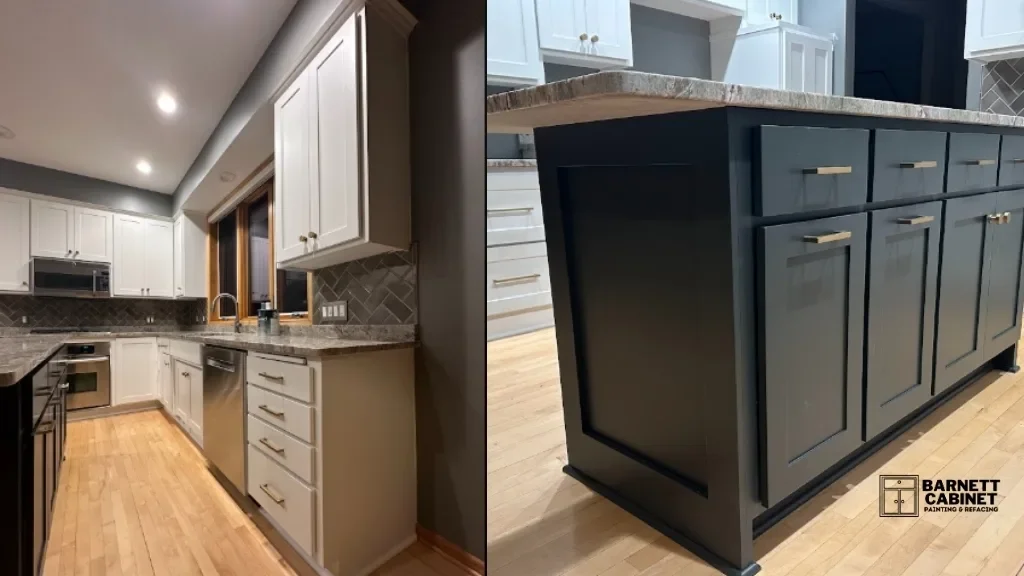
Cabinet refinishing is basically a facelift for the cabinets you already have. You're not replacing anything; you're just giving the finish a redo. So if your cabinet boxes, doors, and drawer fronts are all structurally fine, but the paint's gone dull or scratched, or that stain color just feels dated now, this is usually the move.
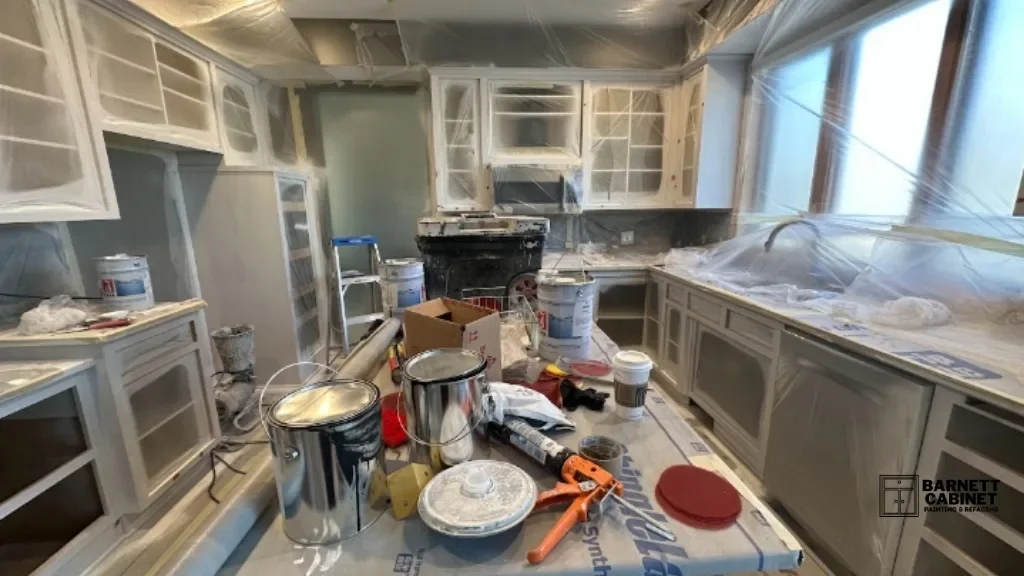
Here's roughly how it goes: Hardware comes off first, everything gets cleaned up, and then the old finish gets sanded or stripped away. After that, on goes a fresh coat of paint or stain, sealed with a protective topcoat. Since nothing's being replaced, it's typically the cheapest of the three options, and most jobs wrap up in about 3 to 7 days.
One thing worth knowing before you get your heart set on this option is refinishing really only works well on solid wood or good-quality wood veneer. Laminate, thermofoil, and some MDF cabinets tend to fight back against a new finish; it just doesn't hold the way it should. So it's worth having someone check your cabinet material before you commit to this route.
Best for: Homeowners who like their current cabinet style and layout just fine but want the color or finish to feel new again.
What is Cabinet Refacing?
Cabinet refacing is where you keep the cabinet boxes (the actual frame bolted to your wall) but replace pretty much everything you see and touch:
New doors and drawer fronts
New hinges, knobs, and pulls
A veneer applied to the exposed sides, face frames, and end panels so it all matches
Basically, the skeleton stays, and the skin changes completely. This is a big deal because it means you can go from traditional oak raised-panel doors to flat modern slab doors, or from a dated finish to a crisp white shaker style, without touching the layout of your kitchen.
Most cabinet refacing projects take 3 to 5 days and cost more than refinishing but significantly less than installing new cabinets. It's also a great option if your current cabinet doors are worn or damaged, since they'll be replaced during the process.
Best for: Homeowners who want a dramatic style upgrade while keeping their existing cabinet boxes.
What Is Cabinet Resurfacing?
Cabinet resurfacing is a broad term used to improve the appearance of existing cabinets without replacing the entire cabinet system. Unlike cabinet refinishing or cabinet refacing, there isn't a single industry-wide definition, so the process can vary from one contractor to another.
Most of the time, though, it means putting a new laminate, veneer, vinyl, or thermofoil layer right over your existing cabinet surfaces to give them a cleaner, updated look. Some contractors will also toss in small extras, like minor repairs or new hardware, as part of the package.
A typical resurfacing job might include:
A new surface finish or decorative overlay
Covering up scratches, dents, and worn-out spots
A fresher look while keeping your current cabinet boxes in place
New hardware, depending on what's included
Since "resurfacing" can mean different things to different people, it's really worth asking your contractor to spell out exactly what's in the package before you commit. That way you're comparing quotes fairly, and you actually know what you're paying for.
Best for: Homeowners who want their cabinets to look new again without a full replacement, and are after a budget-friendly cosmetic fix.
Comparing Cabinet Resurfacing, Refacing, and Refinishing Side-by-Side: The Real Differences
Although these services all improve the look of your cabinets, they differ in how much is changed, the overall cost, project timeline, and the final result. The comparison below highlights the key differences, making it easier to decide which option best fits your kitchen, budget, and renovation goals.
Cost Comparison
The cost varies depending on how much of your existing cabinetry is being updated.
Cabinet refinishing is the most affordable option because it restores the existing finish without replacing cabinet parts.
Cabinet resurfacing typically falls in the middle, although pricing depends on what the contractor includes in the service.
Cabinet refacing costsmore than refinishing because it involves installing new doors, drawer fronts, veneers, and often new hardware.
If your cabinet boxes are in good condition, refinishing or refacing can provide significant savings compared to replacing the entire cabinetry.
Time Comparison
Project timelines depend on the size of your kitchen and the complexity of the work.
The timeline for cabinet resurfacing varies depending on what's included in the project.
If you're looking for the quickest kitchen update with minimal disruption, refinishing or resurfacing can usually be completed within a few days.
Design Flexibility Comparison
Each option offers a different level of design transformation.
Cabinet Refinishing: Changes the cabinet color or stain while keeping the existing door style and layout.
Cabinet Resurfacing: Refreshes the cabinet surfaces, with design options depending on the resurfacing materials and contractor.
Cabinet Refacing: Replaces the doors and drawer fronts, allowing you to choose new styles, colors, finishes, and hardware to create the appearance of brand-new cabinets without replacing the boxes.
If your goal is a completely different kitchen style, cabinet refacing offers the greatest design flexibility.
Material Replacement Comparison
One of the biggest differences is what actually gets replaced.
Knowing which parts are replaced helps you understand why the pricing and results differ between each service.
Durability Comparison
A cabinet upgrade is an investment, so longevity matters.
Cabinet Refinishing can last 8–15 years with proper preparation and maintenance.
Cabinet Resurfacing generally lasts 10–15 years, depending on the quality of the overlay materials and installation.
Cabinet Refacing often lasts 15–20 years or more when high-quality doors and veneers are professionally installed.
Regular cleaning and avoiding excess moisture can help extend the lifespan of all three options.
Installation & Disruption Comparison
Kitchen renovations don't all create the same level of mess.
Cabinet Refinishing requires sanding, painting, or staining but keeps the existing cabinets in place.
Cabinet Resurfacing involves applying new surface materials with minimal demolition.
Cabinet Refacing requires removing and replacing doors, drawer fronts, and veneers, but still avoids tearing out the cabinet boxes.
Compared to a full cabinet replacement, all three options create less dust, less waste, and less disruption to your daily routine.
Recommended Read: Cabinet Refinishing for Home Resale Value: Does It Increase Home Value in Minnesota?
Is It Better to Resurface, Refinish, or Reface Kitchen Cabinets?
There's no one-size-fits-all answer, it depends on the condition of your cabinets and the results you're looking for.
Choose cabinet refinishing if your cabinets are structurally sound and you simply want to update the paint or stain.
Choose cabinet refacing if you want a completely new cabinet style while keeping the existing cabinet boxes.
Choose cabinet resurfacing if you're looking for a cosmetic update, but be sure to ask what the service includes since the term can vary between contractors.
If your cabinet boxes are damaged, warped, or no longer functional, a full cabinet replacement is usually the better long-term investment. Otherwise, refinishing, refacing, or resurfacing can all refresh your kitchen at a lower cost than installing new cabinets.
How to Actually Decide Which One You Need
Forget the definitions for a second. Answer these three questions honestly:
Do you like your current door style? If yes, and your cabinets are solid wood in good shape, refinishing is probably your answer. Why pay more to change something you already like?
Are your cabinet boxes structurally sound? Knock on them. Open and close the drawers. If the boxes are solid but you're sick of the doors, laminate finish, or overall dated look, refacing is usually the sweet spot. This is honestly the option most homeowners land on, because it hits that balance of real transformation without a full remodel budget or timeline.
Is the damage cosmetic and minor? A few scratches, some fading, nothing structural, and you're working with a tighter budget than refacing allows? Resurfacing (the overlay kind) might cover it. Just confirm with your contractor what "resurfacing" means in their specific process before you sign anything.
And if your cabinets have water damage, the boxes are warped or falling apart, or you genuinely hate your kitchen's layout, none of these three fixes it. That's a full replacement conversation, not a refacing or refinishing one. No amount of new veneer fixes a kitchen you need to physically reconfigure.
Recommended Read: How Do You Know If Your Cabinets Are Ready for Refacing (Not Replacement)?
Contact Barnett Cabinet Painting & Refacing
Ready to transform your kitchen without the stress or expense of a complete tear-out? Whether you need a flawless color transformation or a complete door upgrade across the Minneapolis and St. Paul Twin Cities area, our experienced professionals are here to help you choose the right path for your home.
Final Thoughts
At the end of the day, this isn't really about memorizing definitions. It's about looking honestly at what you've got and what you actually want out of your kitchen. If your cabinet boxes are solid and you just can't stand the color anymore, refinishing will save you money and get the job done fast. If you're craving a real style change but don't want the mess of a full remodel, refacing is probably going to be your best bet, and it's the one most Minneapolis homeowners end up happiest with. And if someone's pitching you "resurfacing," just make sure you know exactly what they mean by it before you agree to anything.
None of these decisions need to feel overwhelming. Walk around your kitchen, open a few drawers, knock on a cabinet box or two, and be honest with yourself about what's actually wrong with it. That fifteen minutes of homework will tell you more than any article, including this one, ever could.
Get an estimate from Barnett Cabinet Painting & Refacing
Frequently Asked Questions
-
Refinishing simply changes the color or paint of your existing cabinets. Refacing keeps your cabinet boxes but swaps out all the doors and drawer fronts for brand-new ones. Resurfacing usually means applying a new laminate or vinyl overlay skin over your current surfaces.
-
Not always. While some local contractors use the words interchangeably, others use "resurfacing" strictly to mean adding a laminate or thermofoil overlay rather than installing brand-new custom doors. Always ask your contractor to clarify.
-
Generally, no. Paint and stain do not stick well to laminate or thermofoil surfaces, causing the new finish to peel or bubble quickly. Refacing or an overlay is a much safer choice for those materials.
-
Refinishing is the most budget-friendly option because you keep all your current parts and only pay for labor, prep, and a fresh coat of paint or stain.
-
Professional cabinet refacing usually lasts 15 to 20 years. Cabinet refinishing typically lasts around 8 to 15 years depending on kitchen traffic and wear.
-
No. All three methods use your existing cabinet boxes and layout. If you want to change your kitchen's footprint or add new cabinets, you will need a full kitchen remodel.
-
Check the cabinet boxes, not the doors. If the wooden boxes are sturdy, square, and free from water rot or damage, they are definitely worth keeping and updating.