
Cabinet Spray Painting vs Brush Painting: Why Spray Gives a Factory-Quality Finish
If you are comparing spray painting vs brush painting for your kitchen cabinets, spray painting almost always wins on smoothness and durability. That does not mean brushing is off the table. It depends on your cabinets, your budget, and who is doing the work. Cabinet doors get opened, wiped down, and bumped into every day, so the finish needs to hold up to daily life, not just look good the day it is installed.
This guide walks through how brush painting and spray painting actually differ, what each process looks like, and how professional cabinet painters decide which method fits a given project. Whether you're weighing a DIY repaint or getting quotes from a cabinet refinishing company in the Twin Cities, you'll come away knowing what to ask and what to expect.
Cabinet Spray Painting vs. Brush Painting at a Glance
Spray painting delivers a smooth, factory-quality finish with no visible brush marks.
Brush painting is budget-friendly and suitable for DIY projects but usually leaves more texture.
Proper surface preparation matters more than the application method alone.
Professional cabinet painters typically use spray equipment for the most consistent and durable results.
If you're repainting kitchen cabinets and want long-lasting, showroom-quality results, spray painting is the method most professionals recommend.
What Spray Painting and Brush Painting Actually Involve
When comparing brushing vs. spraying paint, the biggest difference is how the paint is applied. Many homeowners researching brush vs. spray painting are really trying to understand which method delivers a smoother finish and better long-term durability.
Spray painting uses a tool, usually an HVLP (high volume, low pressure) sprayer or an airless sprayer, to break paint into a fine mist and apply it to the surface in thin, even layers. The equipment atomizes the paint under pressure, which is what allows it to settle into a smooth, level coat rather than sitting on the surface in visible strokes. Cabinet doors are typically removed and laid flat or hung on a rack so the sprayer can coat every angle evenly.
Brush painting is the more familiar method: paint is loaded onto a brush and applied by hand, one stroke at a time. It's straightforward and requires almost no special equipment, which is why it's the default for most DIY projects. The tradeoff is that the bristles leave texture behind as they drag through the paint, and getting a fully even coat depends heavily on the painter's technique and the brush quality.
Thinking about updating your cabinets? See how our Cabinet Painting & Refinishing Services deliver a smooth, durable finish without the cost of a full replacement.
Spray Painting vs. Brush Painting: The Core Differences
Spray paint vs. brush paint cabinets comes down to how the paint lands on the surface. A sprayer atomizes paint into a fine mist and builds it up in thin, even layers, while a brush deposits paint in visible strokes that follow the direction of the bristles. That's why the two methods look so different once they dry.
Did You Know?
Cabinet doors and drawer fronts are usually removed and sprayed flat, either horizontally or on a rotating jig. That's a big part of why sprayed finishes look so uniform compared to cabinets painted in place.
Brush vs. Spray Paint: What Professional Cabinet Painters Actually Use
Homeowners often ask what professional painters use to paint kitchen cabinets, and the honest answer is that most cabinet refinishing companies rely on spray equipment for the bulk of the job, with brushes reserved for detail work and touch-ups.
In practice, a professional process usually looks like this:
Assess cabinet condition to figure out whether painting, staining, refinishing, or refacing makes the most sense for the existing boxes and doors.
Remove doors, drawer fronts, and hardware so each piece can be sprayed flat and evenly.
Clean and degrease every surface, since kitchen cabinets pick up cooking residue that isn't always visible but still blocks paint adhesion.
Sand or deglaze the surface to scuff the existing finish so primer can actually bond, especially on cabinets with a factory lacquer or varnish coating.
Apply primer suited to the substrate. Wood, MDF, and laminate each tend to call for a different primer.
Spray multiple thin coats of a cabinet-grade enamel or acrylic urethane enamel, allowing proper drying time between coats.
Cure the finish for the manufacturer's recommended period before reinstalling doors and hardware. Cured paint holds up far better than paint that's simply dry to the touch.
Cabinet frames and boxes that stay in the home are often sprayed on-site with careful masking and containment. Doors and drawer fronts, on the other hand, are usually brought to a controlled spray environment or a dedicated spray booth, where the results tend to be the most consistent.
Recommended Read: Cabinet Painting Process: A Complete Step-by-Step Guide to Achieve a Professional Finish
Why Spray Painting Gives a Factory-Quality Finish
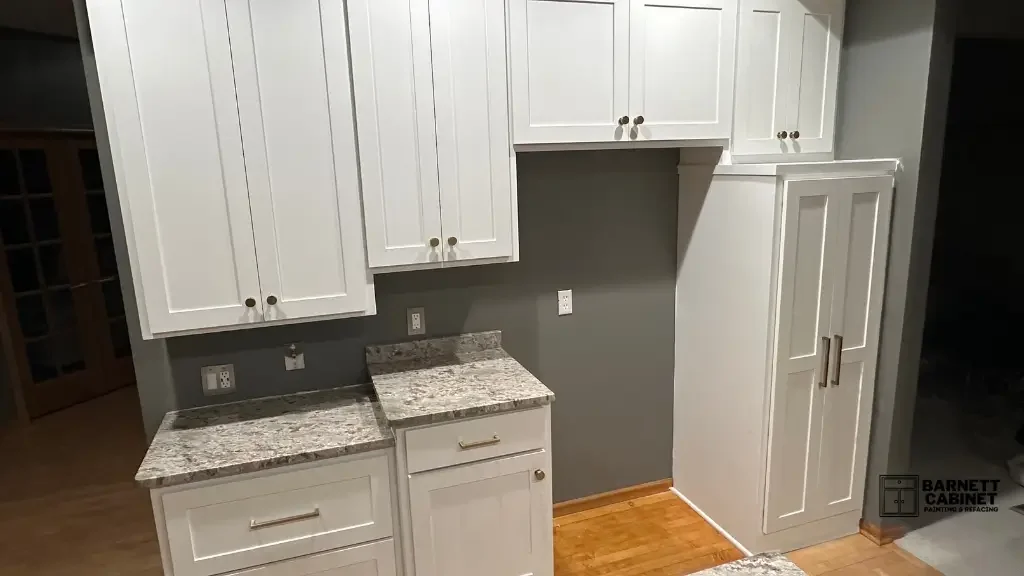
Spray painting is the preferred method for professional cabinet refinishing because it creates a smoother, more consistent finish than brushing. Here's why spray painting cabinets gives a factory finish:
Eliminates brush marks and roller texture
Applies thin, even coats for a smoother finish
Reaches detailed profiles and recessed panels with ease
Reduces visible lap lines for a seamless appearance
1. It eliminates brush marks and roller texture.
A brush leaves ridges as bristles drag through wet paint, and even a good roller leaves a faint stipple pattern. Spraying avoids both because the paint breaks into fine droplets that land flat and level out before drying. That's the main reason cabinet doors from a factory, or from a professional refinishing shop, look glass-smooth up close.
2. It applies thinner, more even coats.
Thin coats sound counterintuitive if you're trying to get full coverage, but they're actually the key to a clean finish. Thick brushed-on coats are more prone to drips, sagging, and uneven drying, especially on vertical cabinet doors. Spraying allows several thin coats that build coverage without those problems.
3. It reaches profiles and recessed panels a brush tends to miss.
Shaker cabinets, raised-panel doors, and cabinets with decorative molding have grooves, bevels, and inside corners that are hard to coat evenly by hand. A sprayer coats those details in one pass, without pooling paint in the recesses or leaving thin spots on the raised edges.
4. It cuts down on visible lap lines.
Lap lines show up when a wet edge dries before the next brush stroke overlaps it, leaving a visible seam behind. Because spraying covers a wide area quickly and evenly, it lowers the chances of lap lines appearing on flat cabinet surfaces.
Important: A spray finish still depends on technique. Holding the sprayer too close, moving too slowly, or spraying in humid conditions can cause drips, an orange-peel texture, or an uneven sheen. Good equipment helps, but experienced application still matters just as much.
A factory-quality finish depends on more than spray equipment. Proper preparation and skilled application are what set every Barnett Cabinet Painting & Refacing project apart.
Durability: Does Application Method Affect How Long the Finish Lasts?
Application method shapes appearance more than raw durability, though the two are connected. A sprayed finish's thin, even coats cure more consistently, and even curing helps the paint reach its full hardness and adhesion. A brushed finish applied too thick in places tends to stay soft longer in those spots, which makes it more prone to chipping or peeling right where the paint pooled up.
The finish product itself carries a lot of weight here too. Cabinet-grade enamel, acrylic urethane enamel, conversion varnish, and standard lacquer all age differently, regardless of how they were applied. Surface preparation matters just as much: paint applied over a poorly cleaned or sanded surface will fail early no matter which tool put it there.
Cost Tip: Spending more on proper surface prep and a quality cabinet-grade finish usually pays off longer than spending more on the application method alone. A well-prepped, brush-painted cabinet can outlast a rushed, poorly prepped, sprayed one.
Cost Considerations: Spray Painting vs. Brush Painting
DIY brush painting is generally the lowest upfront cost option, since it only requires paint, primer, brushes, and sandpaper. Spray equipment, containment materials, and the added labor of removing and reinstalling doors add cost, whether you're renting equipment yourself or hiring a professional.
That said, professional spray-applied cabinet painting is often more cost-effective than full cabinet replacement, since it preserves the existing cabinet boxes and updates only the finish and, if needed, the doors and hardware. For homeowners weighing cabinet painting, refinishing, refacing, or full replacement, spray-applied refinishing usually lands in the middle: a meaningfully lower cost than replacement, with a far more durable result than a typical DIY brush job.
Beyond cost, the paintbrush vs. spray choice also affects the overall appearance of your cabinets. While brushing is more budget-friendly, spray painting typically delivers a cleaner, more professional finish.
Every kitchen is different, so cabinet painting costs depend on your cabinet condition, layout, and finish. Get a free estimate based on your own cabinets to compare your options.
Common Mistakes Homeowners Make With Cabinet Painting
Skipping degreasing. Kitchen cabinets near the stove collect grease that isn't always visible but still prevents paint from bonding properly.
Not sanding or deglossing. Paint applied directly over a glossy factory finish without scuffing it first is prone to peeling later on.
Rushing dry time between coats. Recoating too soon traps solvents underneath and softens the finish.
Reinstalling doors before the paint has fully cured. Cabinets that look dry can still be soft for days or even weeks, and closing them too soon leads to sticking and marring.
Choosing wall paint instead of a cabinet-grade finish. Standard wall paint simply isn't built for the frequent handling and cleaning that cabinets go through.
Choose Barnett Cabinet Painting & Refacing for Your Cabinet Upgrade
If you're weighing spray painting against brush painting for your own kitchen, it helps to work with a team that does this every day and can tell you honestly which approach fits your cabinets.
Family-owned and female-owned, founded by husband-and-wife team Aimee and Jake Barnett, based in Maple Grove and serving the greater Twin Cities.
Specializes in cabinet painting, refinishing, staining, and refacing, with a focus on preserving quality cabinet boxes instead of pushing homeowners toward unnecessary replacement.
Uses spray-applied, cabinet-grade finishes built to hold up to daily use in real kitchens and bathrooms.
Every project is personally managed from start to finish, with transparent pricing and dependable scheduling.
Backed by hundreds of completed cabinet transformations throughout the Twin Cities, with a reputation for craftsmanship homeowners can see up close.
Final Thoughts
When it comes to spray painting vs. brush painting cabinets, spray application is the method professional cabinet painters rely on for a smooth, even, factory-quality finish, particularly on doors with molding, panels, or visible wood grain. Brush painting still has its place for touch-ups, small projects, and DIYers without access to spray equipment, but it generally takes more effort to reach the same level of polish.
If you're considering updating your cabinets, Barnett Cabinet Painting & Refacing can help you explore the best option for your home. Whether you're interested in painting, refinishing, or refacing, requesting a no-obligation estimate is a simple way to get expert guidance tailored to your project.
Frequently Asked Questions
-
It's better to spray paint when the goal is a smooth, professional-looking finish, since spraying eliminates brush strokes and roller texture. Brush painting is a reasonable choice for small projects, touch-ups, or when spray equipment and proper ventilation aren't available.
-
Spray painting is generally better for kitchen cabinets because it produces a smoother, more even coat without brush marks. Brush painting can still work for small touch-ups, but it's harder to get a flawless, factory-like finish across full cabinet doors.
-
Professional painters primarily spray cabinets rather than roll them, because spraying delivers the thin, even coats needed for a factory-quality look. Rolling is sometimes used on cabinet boxes or flat panels with a foam roller, but it's far less common than spraying for full cabinet projects.
-
Professional painters typically use HVLP sprayers along with cabinet-grade enamels or acrylic urethane enamel to paint kitchen cabinets. They also rely on the right primers, degreasers, and sanding tools as part of surface preparation before any paint goes on.
-
Spray painting furniture generally produces a smoother finish, similar to cabinets, especially on pieces with detailed molding or panel work. Brush painting furniture is a practical option for smaller pieces or when a slightly more hand-finished look is what you're after.
-
Spray painting is typically better than brush painting for a smooth, even, professional-looking finish on cabinets and furniture. Brush painting can still produce a solid result, but it usually takes more skill and more touch-up work to minimize visible texture.
-
Spray painting cabinets is a good idea for homeowners who want a smooth, durable, factory-quality finish, especially on doors with molding or raised panels. It does call for proper equipment, ventilation, and technique, which is why many homeowners hire a professional cabinet painting company for the job.
-
Cabinets can be spray painted without full removal, but most professionals remove doors and drawer fronts to spray them flat for the most even coverage. Cabinet frames and boxes that stay in place are typically sprayed on-site with careful masking to protect surrounding surfaces.
-
Spray-painting typically costs more than brush-painting upfront due to the equipment, containment, and labor involved in removing and reinstalling doors. It's still usually less expensive than full cabinet replacement while offering a more durable and consistent finish than a DIY brush job.