
Two Tone Kitchen Cabinets: How to Pull Off the Look with Professional Cabinet Painting
Your kitchen cabinets are probably the biggest visual element in the room, and if they're all one flat color, the whole space can start to feel dated fast. A full replacement runs thousands of dollars and takes weeks. That's a tough pill to swallow when the cabinets themselves are still structurally solid.
Two tone kitchen cabinets solve this problem. By pairing two complementary colors, usually one on the upper cabinets and another on the lower cabinets, you get a custom, designer-level look without touching your cabinet boxes. Professional cabinet painting makes this transformation possible for a fraction of the cost of new cabinetry, and it's one of the most requested kitchen updates Barnett Cabinet Painting & Refacing sees across the Twin Cities right now.
Quick Answer Two-tone kitchen cabinets use two different cabinet colors, most commonly lighter upper cabinets and darker lower cabinets or a contrasting kitchen island. This design adds visual depth, modern style, and can be achieved through professional cabinet painting without replacing structurally sound cabinets.
Two Tone Kitchen Cabinets at a Glance
Use two cabinet colors to add depth and visual interest.
Pair light upper cabinets with dark lower cabinets or a contrasting island for added depth and style.
Match cabinet colors with your countertops, flooring, and hardware.
Professional cabinet painting creates a smooth, durable finish.
Painting costs less and takes less time than replacing cabinets.
Ideal for homeowners with cabinets that are structurally sound.
What Are Two Tone Kitchen Cabinets?
Two tone kitchen cabinets mean using two different colors across your cabinetry instead of one uniform shade. The most common approach splits the color by cabinet position, upper cabinets get one color and lower cabinets get another.
But that's not the only way to do it. Some homeowners split colors by function instead:
Perimeter cabinets in one color, kitchen island in a contrasting color
Pantry or built-in hutch in an accent shade, everything else neutral
Base cabinets on one wall in a different tone than base cabinets on the opposite wall
The goal in every version is the same: create visual interest and depth without overwhelming the space. A well-executed two tone kitchen cabinet scheme reads as intentional and high-end.
Thinking about updating your kitchen without replacing your cabinets? See how Barnett Cabinet Painting & Refacing helps Twin Cities homeowners achieve a beautiful, custom look with professional cabinet painting and refacing.
Why Two Tone Kitchen Cabinets Are So Popular in 2026?
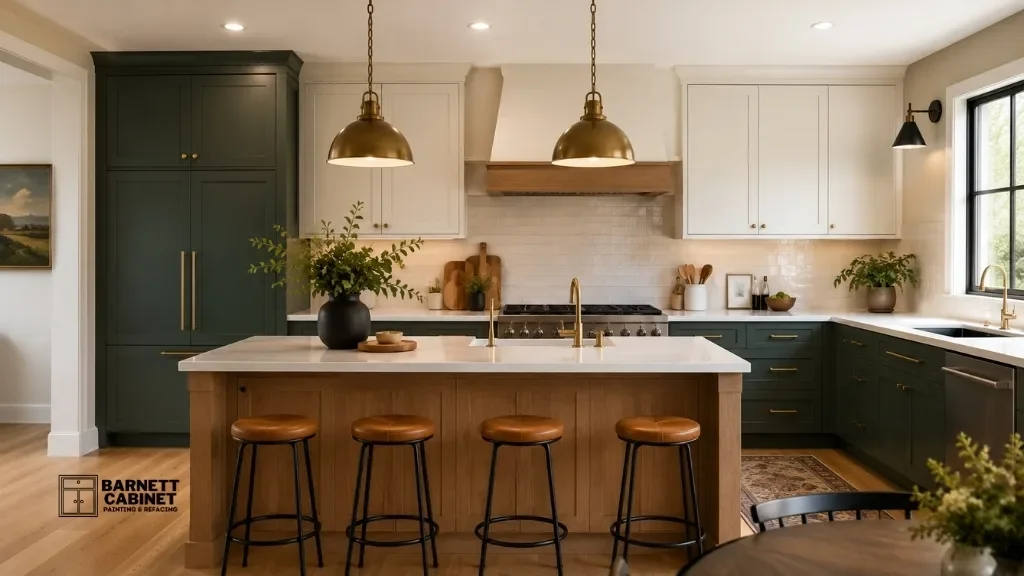
Single-color kitchens aren't going away, but two toned kitchen cabinets have picked up serious momentum over the last several years. A few reasons keep coming up with homeowners:
They break up visual monotony. An all-white or all-gray kitchen can feel flat, especially in larger spaces. Two colors add dimension.
They highlight architectural features. A kitchen island painted a different color than the perimeter cabinets naturally becomes a focal point.
They're flexible across design styles. Two tone works in a modern farmhouse kitchen, a transitional kitchen, or a sleek contemporary kitchen. It's not a one-trick trend.
They make small kitchens feel bigger. Lighter uppers paired with darker lowers create a sense of visual lift, drawing the eye upward and making ceilings feel taller.
They're achievable through refinishing, not replacement. This is the big one. You don't need new cabinet boxes to get this look. Cabinet painting gets you there.
Example: A Maple Grove homeowner had oak cabinets original to their 1990s kitchen. Instead of ripping everything out, they had the upper cabinets painted a soft cream and the lower cabinets painted a deep navy. The kitchen island, which sits in the center of the room, got the same navy as an anchor point. The result looked like a kitchen straight out of a design magazine at a fraction of the remodel cost.
Recommended Read: Modern Cabinet Door Trends 2026/27: What Minneapolis Homeowners Are Choosing
Best Two-Tone Kitchen Cabinet Color Combinations in 2026
Not every color pairing works well in every kitchen. Here are some of the best two tone kitchen cabinet ideas and color combinations that consistently perform well, based on what homeowners are actually choosing right now.
Classic and Safe Combinations
White uppers, navy lowers. This is probably the most requested two tone combination in the Twin Cities right now. It's timeless, pairs with almost any countertop, and works in both traditional and contemporary kitchens.
Cream uppers, sage green lowers. A softer, more organic pairing that fits modern farmhouse and transitional styles particularly well.
White uppers, charcoal or black lowers. A high-contrast option for homeowners who want a bolder, more dramatic look. Works especially well with brass or gold cabinet hardware.
Bolder, More Personality-Driven Combinations
Warm white uppers, terracotta or rust lowers. An emerging combination for homeowners wanting warmth without going fully traditional.
Two-tone with a stained wood accent. Some homeowners keep the kitchen island in its natural wood finish (or a stain) while painting the surrounding cabinetry. This blends cabinet refinishing and cabinet staining techniques in one kitchen.
Deep green uppers, white lowers. Less common, but a striking flip on the usual light-up, dark-down formula. Works well in kitchens with abundant natural light.
Island-Focused Two-Tone
If a full two-tone split feels like too big a commitment, painting just the kitchen island a contrasting color is a lower-risk way to get a similar effect. It's a smaller surface area, so it's also more budget-friendly, and it still creates that designer-level focal point.
Recommended Read: Bathroom Cabinet Refacing: Can You Reface a Vanity?
How to Choose the Right Color Combination for Two-Tone Kitchen Cabinets?
The best two-tone kitchen cabinet color combination depends on your lighting, countertops, flooring, and cabinet layout. Here's what to weigh before committing to a combination:
1. Consider Natural Light
Kitchens with abundant natural light can handle darker colors, including darker upper cabinets, without feeling closed in. Kitchens with limited natural light generally do better keeping the lighter color up top to maintain an open, airy feel.
2. Match Existing Countertops
Your countertop needs to work with both cabinet colors, not just one. Busy stone patterns pair better with simpler, more neutral cabinet colors, while solid-color countertops leave more room for bold cabinet contrast.
3. Coordinate Cabinet Hardware
Hardware finish ties a two tone scheme together. Brass, matte black, and brushed nickel all read differently depending on the cabinet colors surrounding them, so this decision shouldn't be an afterthought.
4. Think About Flooring
Warm-toned wood floors generally pair better with warm cabinet colors, while cooler flooring tones (like gray-toned wood or tile) pair better with cooler cabinet colors. Mismatched undertones between floor and cabinets are a common source of a kitchen looking "off" without homeowners being able to pinpoint why.
5. Decide Which Cabinets Should Be Darker
As a general rule, upper cabinets should be lighter and lower cabinets darker. Light colors up top keep the kitchen feeling open, while darker lower cabinets feel grounded and also hide daily scuffs and fingerprints better, since they take the most physical contact in the kitchen. There are exceptions for kitchens with high ceilings or exceptional natural light, but this is the safest default.
Not every color combination works with every kitchen. A professional cabinet paintercan help you choose kitchen cabinet colors that complement your flooring, countertops, backsplash, and lighting.
Common Mistakes to Avoid With Two Tone Cabinets
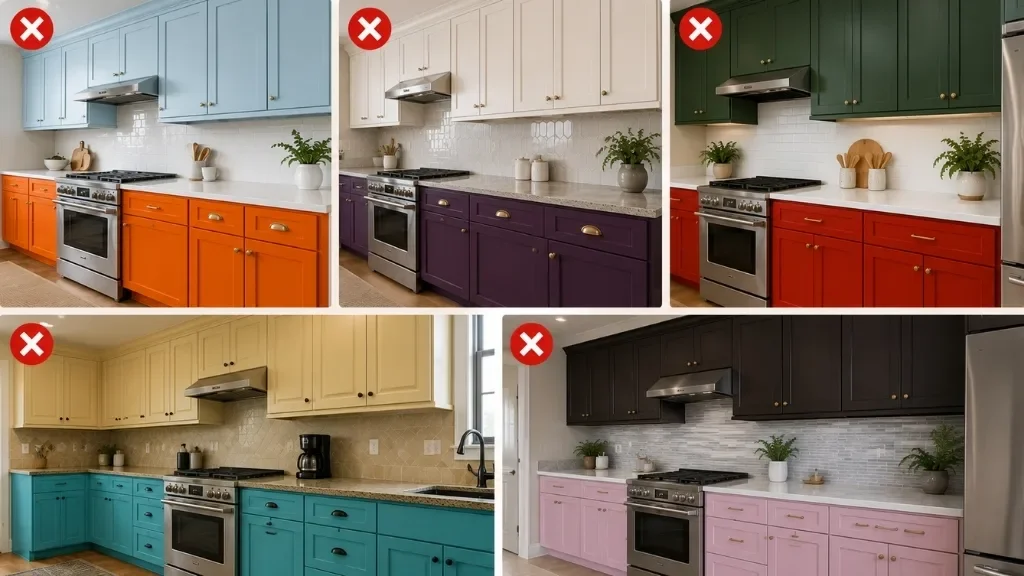
A few missteps show up again and again with two-tone projects:
Choosing two colors with clashing undertones. A cool-toned white paired with a warm-toned lower color can look off, even if both colors look fine individually. Undertones matter more than the colors themselves.
Skipping the hardware update. Old, dated hardware can undercut an otherwise great two-tone paint job. Updated pulls and knobs tie the whole look together.
Ignoring the countertop and backsplash. Your existing countertop and backsplash need to work with both cabinet colors, not just one.
DIY painting without proper primer. This is the number one cause of early paint failure. Skipping primer to save time almost always costs more later in touch-ups or redoing the job entirely.
Too much contrast without a unifying element. If the two colors are drastically different with nothing tying them together, like matching hardware or a shared accent color elsewhere in the kitchen, the space can feel disconnected instead of designed.
How Professional Cabinet Painting Makes Two-Tone Cabinets Possible
A two tone kitchen cabinet look is only as good as the paint job underneath it. This is where cabinet painting for two-tone kitchens earns its keep over a DIY approach.
Professional cabinet painters bring a process most DIY jobs skip entirely: full cabinet door removal, deep degreasing, sanding, bonding primer, and multiple thin coats sprayed on in a controlled environment.
Cabinet door and hardware removal. Doors, drawer fronts, and hardware get removed and labeled so nothing gets misaligned during reinstallation.
Deep cleaning and degreasing. Kitchen cabinets accumulate cooking grease and grime, especially near the stove. Paint won't properly bond to a greasy surface.
Sanding and surface prep. This creates a surface the primer can actually grip, rather than sitting on top of old lacquer or varnish.
Priming. This step gets skipped constantly in DIY jobs, and it's the single biggest reason cabinet paint fails early. A quality bonding primer is what allows paint to adhere to cabinet surfaces long-term instead of chipping at the corners within months.
Spray-applied paint in a controlled environment. Professional painters use sprayers rather than brushes or rollers for a smooth, factory-like finish, free of brush strokes.
Multiple thin coats with cure time between them. Rushing coats leads to uneven texture and premature wear.
Reassembly with hardware and soft-close hinges. The final step brings everything back together, often with updated cabinet hardware to complete the new look.
This is where the two-tone effect actually gets its polish. A clean, sharp paint line between the upper and lower colors, especially where they meet on the same wall, requires careful masking and a steady, experienced hand.
Recommended Read: Cabinet Staining vs Painting: Which Finish Lasts Longer in a Minnesota Kitchen?
Two Tone Cabinet Painting vs. Full Cabinet Replacement
If your cabinet boxes are solid and your only complaint is the color or finish, painting gets you a comparable visual result without the cost or disruption of a full remodel, making 2 tone kitchen cabinets an affordable upgrade.
How Much Do Two Tone Kitchen Cabinets Cost?
Cabinet painting costs vary based on kitchen size, cabinet condition, and the number of doors and drawers involved. Two tone projects generally fall in a similar cost range to single-color cabinet painting, since the labor difference mainly comes down to additional masking and color transitions rather than a dramatically different process.
Factors that influence the final cost:
Total number of cabinet doors and drawer fronts
Current condition of the cabinets (grease buildup, damage, previous finish)
Whether hardware is being replaced
Kitchen size and layout complexity
Getting an accurate number means having your specific kitchen assessed. Barnett Cabinet Painting & Refacing provides free, no-obligation estimates for homeowners across the Twin Cities looking to explore two tone kitchen cabinet options.
Recommended Read: Cost to Paint Kitchen Cabinets (2026 Guide for Minnesota Homeowners)
Why Homeowners Across the Twin Cities Choose Barnett Cabinet Painting & Refacing
Barnett Cabinet Painting & Refacing has built a reputation across the Twin Cities for delivering cabinet transformations homeowners can count on, backed by:
Experienced professionals who handle every step of the prep and painting process
Premium cabinet coatings built to withstand daily kitchen wear
Durable finishes that hold up against grease, moisture, and everyday handling
Transparent pricing, so there are no surprises once a project is underway
Local expertise, with deep familiarity working in Twin Cities homes and kitchen layouts
Free estimates for homeowners exploring their options
Service areas throughout the Twin Cities, covering homeowners across the metro
Request your free estimate for Two Tone Cabinets today to see how professional cabinet painting can transform your kitchen with a beautiful two tone design.
Final Thoughts
Two tone kitchen cabinets give you a designer-level kitchen refresh without the cost, mess, or timeline of a full remodel. The formula that works best in most kitchens is simple: lighter uppers, darker lowers, matching undertones, and updated hardware to tie it all together.
The part that separates a two-tone kitchen that looks professionally finished from one that looks like a DIY project gone sideways comes down to the prep and paint process, not just the color choice. Proper degreasing, sanding, priming, and spray-applied coats are what make the finish last.
If you're in the Twin Cities and ready to refresh your kitchen, contact Barnett Cabinet Painting & Refacing for a free estimate. We'll help you create the perfect two-tone cabinet look with a professional finish.
Frequently Asked Questions
-
Yes, and they're actually trending upward. Kitchens are moving away from all-white toward warmer, layered color combinations, and two-tone setups are a big part of that shift.
-
Yes, for most kitchens. Two-tone cabinets add depth and visual interest that a single-color kitchen often lacks, and the look works whether your cabinets are original or newly painted. The main thing to get right is color placement and undertone matching, which is where a professional consultation helps.
-
Generally, the lighter color goes on the upper cabinets and the darker color on the lower cabinets. This keeps the kitchen feeling open near the ceiling while grounding the space with a deeper tone below.
-
Yes. In fact, two tone can make a small kitchen feel larger by adding visual depth. Sticking with a lighter upper color and reserving the darker tone for lower cabinets works especially well in tighter spaces.
-
White paired with navy, sage green, or charcoal gray are among the most popular and reliable combinations. The right choice ultimately depends on your countertops, flooring, and the amount of natural light in your kitchen.
-
The difference is typically minor. Two tone requires more careful masking for clean color transitions, but the core process, prep, primer, and coats, is the same regardless of how many colors are used.
-
In most cases, yes. Two-tone cabinets increase a home’s resale value, since an updated, professionally finished kitchen generally appeals more to buyers than dated or worn cabinetry.
-
Absolutely. Painting just the island a contrasting color is a popular, lower-commitment way to introduce a two tone effect without repainting the entire kitchen.
-
Most cabinet painting projects, two tones included, take just a few days from prep through final reassembly, a fraction of the time a full cabinet replacement typically requires.