
Eco-Friendly Refacing Options for a Greener Home Makeover
If you want a fresh look for your home without the guilt of a massive renovation, eco-friendly refacing options are one of the smartest upgrades you can make. Whether it's your kitchen, bathroom vanity, laundry room, or home office built-ins, you keep your existing cabinet boxes, swap out the visible parts, and end up with spaces that look brand new, without sending a truckload of perfectly usable wood to the landfill. Once you see how good it looks, you'll wonder why full replacement was ever considered.
This guide is for homeowners who want to do it right. We're talking sustainable materials like bamboo, reclaimed wood, and FSC-certified panels, paired with low-VOC and zero-VOC finishes that keep your indoor air clean instead of filling it with chemicals you can't see or smell until it's too late.
Whether you're eco-conscious, budget-focused, or just tired of looking at the same cabinets throughout your home, this guide covers everything from the greenest materials to finishes that won't mess with your indoor air quality.
Quick Overview: Eco-Friendly Cabinet Refacing
The Core Concept: Cabinet refacing replaces only the visible parts (doors, drawer fronts, and veneers) while keeping the existing structural boxes. It applies to kitchens, bathrooms, laundry rooms, and home offices.
Environmental & Cost Benefits: It cuts renovation costs roughly in half, drastically reduces landfill waste by preserving up to 75% of the original wood mass, and carries a much lower carbon footprint than manufacturing and shipping new, heavy cabinets.
Top Sustainable Materials:
Bamboo: Rapidly renewable and highly durable.
Reclaimed Wood: Salvaged timber that adds unique character with zero new resource consumption.
FSC-Certified Wood: Responsibly harvested timber that protects forest ecosystems.
Agricultural Waste Cores: Formaldehyde-free panels made from leftover crop stalks.
Healthier Indoor Air: Using water-based, low- or zero-VOC paints, sealers, and plant oils prevents harmful chemical off-gassing, creates a safer environment for kids and pets, and speeds up drying times.
Value-Adding Additions: Homeowners can maximize their mid-renovation sustainability by pairing refacing with LED lighting, water-saving fixtures, and countertops made from recycled glass, paper composite, or quartz.
Longevity: When installed professionally and sealed with high-quality water-based finishes, eco-friendly refacing options easily last 15 to 20 years.
What Is Cabinet Refacing?
Cabinet refacing means replacing only the visible parts of your cabinets such as the doors, drawer fronts, and outer veneers, while the existing boxes stay exactly where they are. It's basically a facelift for any room in your home, not a full surgery.
This approach works across your entire home: kitchen cabinets, bathroom vanities, laundry room storage, built-in bookshelves, mudroom lockers, and home office cabinetry. If it has a door or a drawer front, it can be refaced.
Refacing vs. Full Replacement: Which Is Better?
| Feature | Cabinet Refacing | Full Replacement |
|---|---|---|
| Waste Produced | Low | High |
| Cost | Lower | Higher |
| Installation Time | Faster | Longer |
| Environmental Impact | Smaller | Larger |
Unless your cabinet boxes are falling apart, refacing wins almost every time. You get 80-90% of the visual impact at roughly half the cost and a fraction of the environmental damage.
Want a home upgrade that looks amazing without creating unnecessary waste?? Explore how Barnett Cabinet Painting & Refacing helps homeowners transform outdated cabinets with smart, eco-friendly refinishing and refacing solutions.
How to Choose the Best Eco-Friendly Refacing Options?
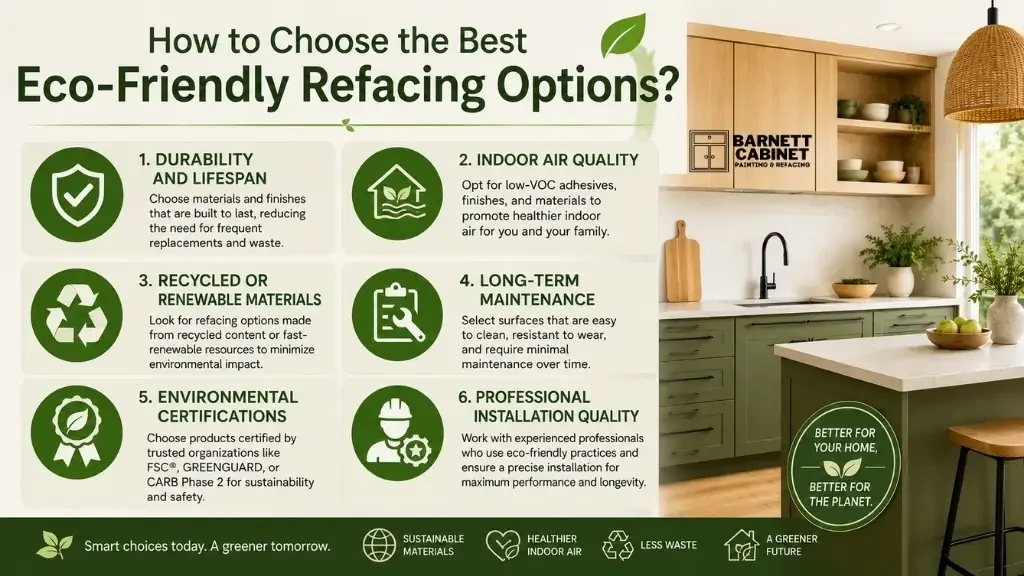
Choosing the right eco-friendly refacing materials is not just about appearance. The best options should be durable, safe for indoor air quality, easy to maintain, and responsibly sourced. From bamboo panels to low-VOC finishes, each material plays a role in creating a healthier and longer-lasting home upgrade.
When comparing refacing materials and finishes, focus on:
durability and lifespan
indoor air quality
recycled or renewable materials
long-term maintenance
environmental certifications
professional installation quality
A well-planned refacing project should balance sustainability, appearance, and long-term performance without creating unnecessary renovation waste. Choosing responsibly sourced materials helps make the entire refacing project healthier and more sustainable. You just need to make sure the new materials you bring in are as clean and responsibly sourced as possible.
Recommended Read: Cabinet Painting Mistakes (And How to Avoid)
Best Eco-Friendly Cabinet Materials for Refacing
The materials you choose make or break the sustainability of your refacing project. Look for renewable sources, recycled content, and certifications like FSC, GREENGUARD, or FloorScore, those are the ones that actually mean something.
Sustainable Materials for Doors and Veneers
The most sustainable materials for cabinet doors and veneers include bamboo panels, FSC-certified wood, reclaimed wood, agricultural waste boards like wheatboard and strawboard, and recycled wood veneers. These options are either rapidly renewable, sourced responsibly, or made from waste materials, and most are free from harmful chemicals like formaldehyde.
Bamboo Panels
Bamboo matures in just 3-5 years, compared to decades for most hardwoods, making it one of the most renewable materials. It's exceptionally strong, carries a clean modern aesthetic, and holds up remarkably well in the heat and humidity of a home environment.
Agricultural Waste Cores
Wheatboard and strawboard are made from leftover crop stalks compressed into panels using formaldehyde-free resins. You're essentially turning agricultural waste into solid cabinet material while keeping harsh chemicals out of your home.
Beyond the sustainability angle, going formaldehyde-free improves indoor air quality throughout the entire house, especially important in enclosed spaces like bathrooms or laundry rooms with limited ventilation.
FSC-Certified Wood Products
FSC stands for Forest Stewardship Council, an independent body that certifies wood from responsibly managed forests. When you see that logo, it means the timber was harvested without wrecking ecosystems or exploiting workers. For homeowners who want real wood anywhere in their home and want confidence about where it came from, FSC certification is the most credible signal available.
Reclaimed Wood Cabinet Refacing
Reclaimed wood is salvaged timber, like old barn wood, factory beams, or repurposed flooring, given a second life on your cabinet fronts. It cuts demand for newly harvested wood and brings a genuinely unique character to any space that no new material can fake. The grain patterns, weathering, and history it carries are visible in every room it touches. It's sustainability you can see and feel.
Recycled Wood Veneers
These are thin sheets made from leftover wood fibers and offcuts. They look like solid wood, cost less, and use materials that would've otherwise gone to waste. Simple and effective. If you want an eco-conscious finish that doesn't compromise on aesthetics or your budget, recycled veneers are a straightforward, practical choice.
Recommended Read: Cabinet Refacing vs Refinishing: Which Is Right for Your Twin Cities Home?
Low-VOC Cabinet Finishes for Healthier Indoor Air
Low-VOC cabinet finishes are paints, sealers, and adhesives that contain little to no volatile organic compounds, the chemicals in standard finishes that keep releasing into your air long after the job is done. This issue matters in every room of your home, not just the kitchen. Bathrooms, bedrooms, home offices, and playrooms all benefit from cleaner air. Choosing low-VOC finishes means less odor, less chemical exposure, and a safer home without giving up anything in quality or durability.
What Are Low-VOC Paints and Sealers?
Low-VOC paints and sealers are finishes formulated with significantly fewer harmful chemicals than conventional options. They produce less odor during application, clear out of your air faster, and create a safer environment for kids, pets, and anyone spending time with any finished goods.
They perform just as well; in most cases you won't notice any difference except the smell being way less intense.
Water-Based vs. Oil-Based Cabinet Finishes
For a green remodel, water-based finishes win. They have lower VOC levels, dry in 2 to 4 hours instead of 24 to 48, smell way better, and clean up with just water. Oil-based finishes need harsh solvents just to clean your brush.
Here's how they actually compare:
| Feature | Water-Based | Oil-Based |
|---|---|---|
| VOC Level | Low | High |
| Drying Time | Fast (2–4 hrs) | Slow (24–48 hrs) |
| Odor | Minimal | Strong |
| Durability | Very Good | Excellent |
| Cleanup | Water | Harsh solvents |
| Eco-Friendly | Yes | No |
Modern water-based formulas have closed the durability gap significantly, so there's really no good reason to go oil-based for a green remodel.
Non-Toxic Finishes and Adhesives
The best non-toxic finishes and adhesives for cabinet refacing are water-based polyurethane, natural plant oils like linseed, tung, and hemp, and formaldehyde-free adhesives like soy-based glues and water-based contact cements. These keep harmful chemicals out of your home during the project and long after it's done.
Water-Based Polyurethane: This one is clearly the best choice. It protects the wood, puts out minimal VOC emissions, and dries in just a few hours. Plus, cleanup is just water, no harsh solvents, no headache.
Natural Plant Oils: Linseed, tung, and hemp oils actually soak into the wood instead of just sitting on top of it. So you get natural water resistance built right into the surface. No synthetic additives, no off-gassing, and they're fully biodegradable on top of that.
Formaldehyde-Free Adhesives: This one matters more than people realize. Soy-based glues and water-based contact cements bond your veneers to the cabinet frames just as well as the standard stuff, except they don't keep releasing chemicals into your air over time.
Recommended Read: Can You Refinish Oak Cabinets?
Sustainable Kitchen Cabinet Upgrades That Pair With Refacing
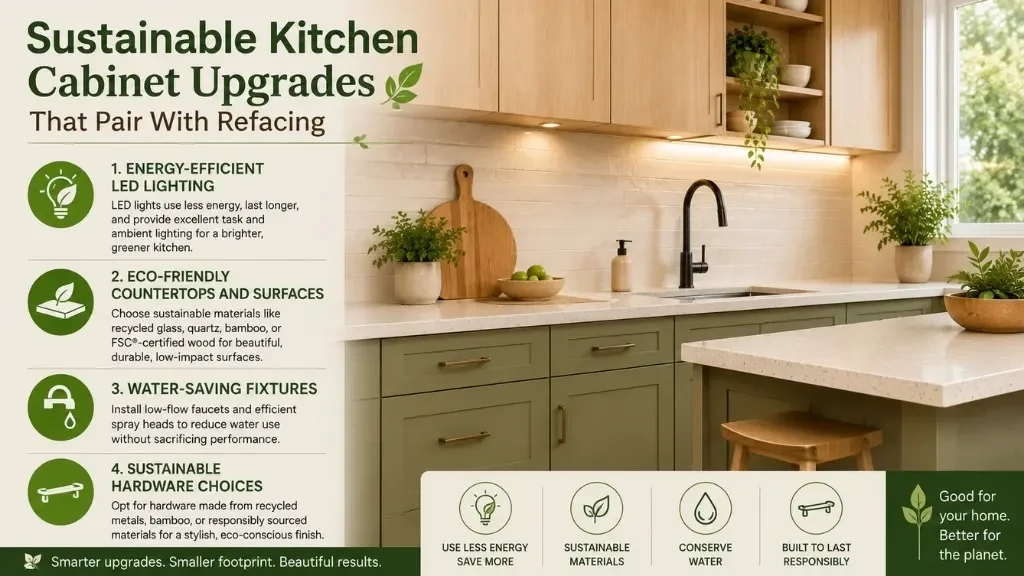
The best sustainable kitchen upgrades to pair with cabinet refacing are energy-efficient LED lighting, eco-friendly countertops, water-saving fixtures, and hardware made from recycled or reclaimed metals. Each one builds on what refacing already starts, so your kitchen ends up genuinely sustainable, not just surface-level green.
Refacing is a fantastic start. This phase is a good time to add a few more upgrades that will have a real impact, especially since you are already mid-renovation and things are getting moved around anyway. Here's what's worth doing.
If you are searching for practical green kitchen remodeling ideas, combining cabinet refacing with energy-efficient lighting and sustainable materials is one of the smartest places to start.
Planning a greener kitchen remodel? Get a Free Quote from our team about eco-friendly cabinet finishes, low-VOC paints, and sustainable kitchen upgrades.
Energy-Efficient LED Lighting
LED lights use up to 75% less electricity than incandescent bulbs and last 15-25 times longer. Swapping under-cabinet lighting in the kitchen, vanity lighting in bathrooms, or task lighting in a home office while you're already mid-renovation is a simple change that adds up quickly across every room in the house.
Eco-Friendly Countertops and Surfaces
If you're updating surfaces at the same time, the most eco-friendly options are quartz with recycled content, recycled glass, reclaimed wood, and recycled paper composite. These apply just as well to bathroom vanity tops and laundry room counters as they do to kitchen countertops. All are significantly better choices than freshly quarried stone or standard laminate, which both carry a much heavier environmental footprint.
Water-Saving Fixtures
A WaterSense-certified faucet can cut water use by up to 30% without any noticeable drop in pressure, and that matters in kitchens and bathrooms equally. It is a small swap that most people barely think about during a renovation, but water waste is a real issue and this change is one of the easiest ways to address it without spending much.
Sustainable Hardware Choices
The most sustainable cabinet hardware options are pulls and handles made from recycled metals, reclaimed stainless steel, or aluminum. They're durable, they look fantastic, and they come with a much lighter environmental footprint than freshly manufactured hardware.
Why Refacing Is the Eco-Friendly Choice for Your Home?
Cabinet refacing is the eco-friendly choice because it eliminates demolition waste, skips new manufacturing from raw timber, and cuts the emissions that come with shipping heavy cabinets. Same fresh look in any room, at a fraction of the environmental cost.
Compared to full replacement, refacing creates the following:
less landfill waste
lower carbon emissions
reduced material consumption
fewer transportation and manufacturing demands
cleaner indoor air with low-VOC finishes
faster and less disruptive renovations
Because the cabinet boxes stay in place, refacing preserves a large portion of the original materials already inside the home. This reduces unnecessary demolition while still giving kitchens, bathrooms, laundry rooms, and other spaces a fresh, updated appearance.
Refacing also requires fewer new resources than manufacturing and shipping entirely new cabinetry. Lightweight veneers, replacement doors, and sustainable finishes create a smaller environmental footprint while still delivering long-lasting results.
Recommended Read: How Long Does Cabinet Paint Last?
Less Landfill Waste
Keeping your existing cabinet boxes in place, in any room, preserves up to 75% of the total wood mass of those cabinets. That is the difference between a dumpster full of perfectly functional material sitting in your driveway and basically nothing going to waste at all.
Full replacement means demolishing cabinets that still work fine, hauling them out, and dumping them. Refacing skips that entire step before it even starts. So the waste chain gets cut way down just by keeping what's already there.
Lower Carbon Footprint
Shipping heavy, fully assembled cabinet boxes burns a serious amount of fuel. Lightweight veneers and door panels don't. Fewer truck runs, less packaging, and lower emissions overall.
And that's before you factor in the manufacturing side. New cabinets have to be built somewhere, loaded somewhere, and then driven to your door. Refacing materials are a fraction of the weight and volume. So basically, the carbon footprint shrinks at every step of the chain, not just one.
Conserves Raw Materials
Brand new cabinets mean brand new timber. That's raw material pulled straight out of the supply chain to replace boxes that were already doing their job perfectly fine. Refacing doesn't work that way.
Thin veneers and replacement doors use a fraction of the raw timber that fully assembled new cabinets require. Less material coming in, less waste going out. And when you pair that with FSC-certified or reclaimed options, you're not just using less, you're making sure what you do use came from somewhere responsible.
Cost of Eco-Friendly Cabinet Refacing
Eco-friendly cabinet refacing typically runs at a fraction of the cost of a full replacement, making it a highly sustainable choice for both your home and your budget. Whether you are updating a kitchen or breathing new life into cabinetry throughout other areas of your home, you are looking at roughly half the cost, sometimes even less, for a result that looks just as excellent as brand new custom installations.
What affects the price:
Room size: More doors and drawer fronts means more material and labor
Material choice: Reclaimed wood and FSC-certified doors cost more than bamboo or recycled veneer
Finish type: Zero-VOC premium finishes carry a slight premium
Labor: Professional installation makes a big difference in how long it lasts
Quality eco materials like bamboo and FSC-certified hardwood can easily last 15-20 years when sealed with a good water-based finish. At that cost per year, refacing beats full replacement pretty comfortably, especially when you factor in LED lighting and water fixture savings on top.
Final Thoughts
Eco-friendly refacing options give homeowners a practical way to modernize any room in their home while reducing unnecessary renovation waste. Instead of tearing everything out and starting over, homeowners can refresh the space using durable materials, modern finishes, and thoughtful upgrades that improve both appearance and everyday function.
One of the biggest advantages of refacing is flexibility. Whether you prefer a modern design, a natural wood look, or a more timeless style, sustainable refacing options make it possible to customize your home while still making practical long-term choices.
With faster installation, less disruption, and lower overall renovation demands, cabinet refacing offers a balanced solution for homeowners who want cleaner, updated spaces without an overwhelming remodeling process.
Ready to give your home a fresh new look without the cost and waste of full replacement? Get Your Estimate today and see how eco-friendly cabinet refacing can completely transform your space.
Frequently Asked Questions
-
Sustainable cabinet refacing reduces renovation costs, shortens installation time, and supports environmentally responsible remodeling practices. It also allows homeowners to refresh the appearance of any room, from kitchens and bathrooms to laundry rooms and home offices, without completely replacing functional cabinetry.
-
Yes, eco-friendly home upgrades appeal to a growing number of buyers and offer strong resale returns. Refacing delivers most of the visual impact of a full remodel at a fraction of the cost.
-
Reclaimed wood is the most sustainable option, it requires no new resources at all. If you need new material, FSC-certified wood and bamboo are the top choices.
-
Yes, Low-VOC finishes reduce harmful chemical emissions, improve indoor air quality, and are safe for kids and pets. Modern formulas are just as durable as conventional ones.
-
Eco-friendly cabinet refacing lasts 15-20 years with quality materials and proper installation.
-
Yes, cabinets in excellent condition can be donated to organizations like Habitat for Humanity's ReStore. Solid wood pieces can also be upcycled into shelving or furniture.
-
Yes. Recycled wood veneers, reclaimed wood doors, and recycled metal hardware are all suitable for cabinet refacing. Reclaimed wood is especially popular for its unique look and zero-waste sourcing.
-
Yes. Cabinet refacing is usually much more affordable than full cabinet replacement because the existing cabinet structure stays in place. You only update the visible parts like doors, drawer fronts, and finishes.