

How Long Does Cabinet Paint Last?
If you are planning to paint your cabinets, one big question always pops up: How Long Does Cabinet Paint Last? Nobody wants to repaint every year. The good news is, painted cabinets can last many years if done right.
Cabinet paint is like a shield in basic terms. It may last a long time if you take care of it and get ready for it. If you don't, it could chip faster than you think. Choosing the best paint for cabinet is important.
Let's go over everything step by step so you can comprehend everything.
What is the lifespan of painted cabinets?
Cabinets that have been painted normally endure between 5 and 10 years. They can even persist longer in rare circumstances:
| Condition | Expected Lifespan |
|---|---|
| Poor prep or low-quality paint | 2–4 years |
| Average quality work | 5–7 years |
| High-quality paint + proper prep | 8–10+ years |
Recommended Read: Step by Step Complete Cabinet Painting Process Guide
Factors that Affect Cabinet Paint Durability
Not all cabinets with paint on them last the same amount of time. A lot of little things matter a lot.
1. Surface Preparation
This is the base. The paint won't stick well if you omit it.
Getting rid of oil and grime
Sanding the top
Using a primer
Skipping planning is like constructing a home on sand: it won't last.
2. Quality of Paint
Longer durability with better paint.
Cheap paint chips easily.
Enamel or acrylic paint of high quality lasts longer
Tip: Don't use wall paint; use colours made for cabinets.
3. Level of Use
In busy kitchens, cabinets wear out faster.
Families cooking every day increases wear
Use it once in a while to make it last longer.
4. Heat and moisture
Kitchen cabinets deal with:
Steam and oil splashes
Cooking heat
These can gently chip away at paint.
5. How to use it
The way the paint is put on is important:
Spray finish makes things smooth and long-lasting.
Brush or roller? It depends on your competence.
Recommended Read: Is Cabinet Painting Worth it?
In Summary
| Factor | Impact on Lifespan |
|---|---|
| Prep work | Very high |
| Paint quality | Very high |
| Usage | Medium to high |
| Moisture/heat | Medium |
| Application method | Medium |
How Long Does Paint Last on Kitchen Cabinets?
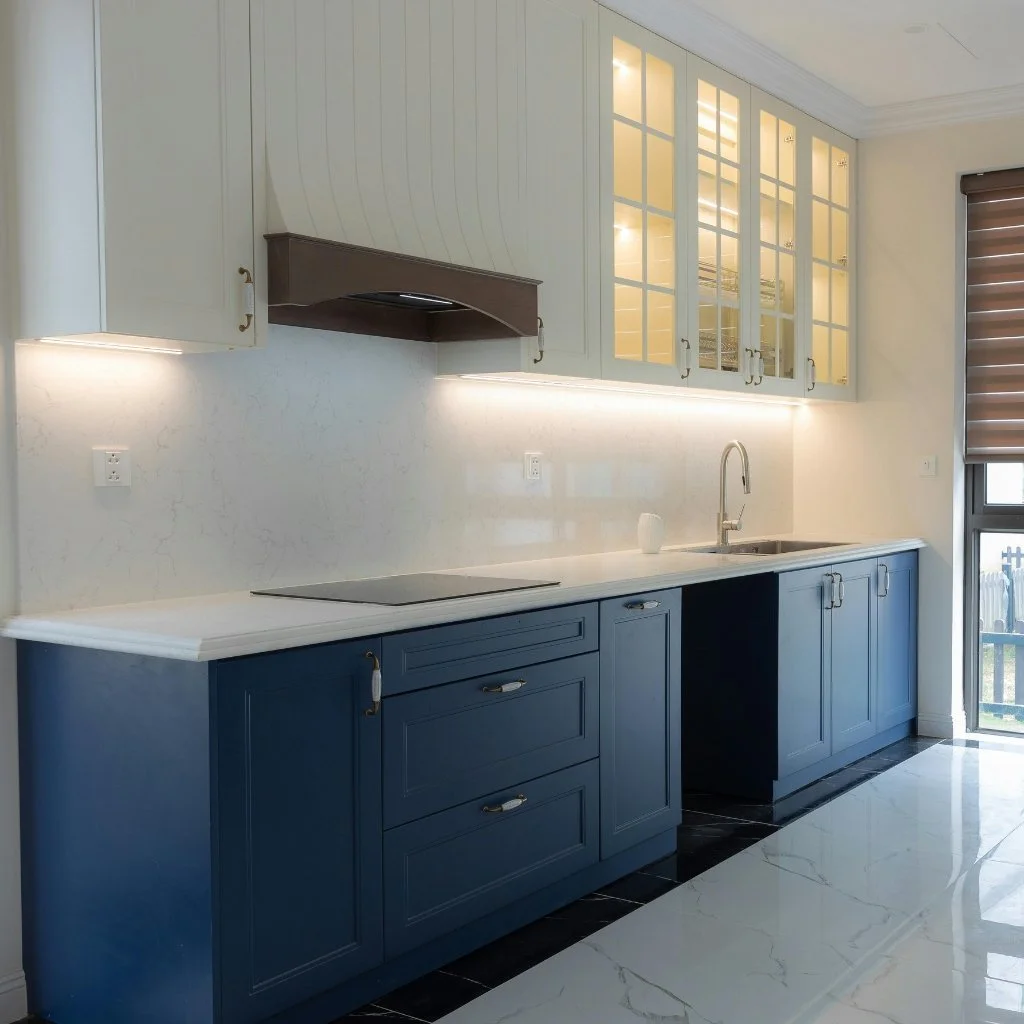
It's true kitchen cabinets are like the "high-traffic freeways" of your home." Your cabinets are touched hundreds of times a day, frequently with dirty hands, but a bedroom wall might not get a scratch for 10 years.
Typical lifespan in kitchen:
5–8 years for most homes
Up to 10 years with proper care
Here is a deeper look into why that 5–10 year window exists and how the "battlefield" conditions actually break down the finish.
Barnett Cabinet Painting and Refacing helps you with the professional Cabinet Refacing, Painting, and Staining services. Serving the Twin Cities.
1. The Chemistry of "Hand Grease":
It’s not just dirt; it’s biology. Natural oils from your skin, combined with kitchen grease, are mildly acidic. Over time, these oils sit on the surface around the handles and knobs. If the paint isn't a high-quality alkyd or urethane enamel, those oils will eventually soften the paint film, making it feel "gummy" or sticky. Once the paint softens, it begins to peel away from the wood.
2. Expansion and contraction due to heat:
The kitchen is the only area in the house where the temperature changes quickly.
The Stove Factor : The wood in the cabinets gets bigger when you boil water or use the oven.
The Cooling Phase : The wood gets smaller as the kitchen cools down.
You will observe small hairline fractures at the joints (where the vertical and horizontal portions of the door meet) if the paint isn't flexible enough to move with the wood. The first indicator that the paint is starting to wear off is these cracks.
3. The "Steam and Scrub" Cycle:
Steam is a quiet killer of finishes. It gets into the tiniest flaws in the paint, breaking the link between the paint and the primer.
Cleaning Fatigue : We often use strong dish soaps or degreasers to keep our kitchens clean.
Abrasives : When you scrape off a dried sauce spatter, you are basically "sanding" off a little layer of paint. This wears down the protective coating over the course of five years.
4. Effect and Friction
Kitchens are places where people work. We accidently strike cabinets with pots, vacuum cleaners, and grocery bags.
The Chipping Point: Cabinet doors feature sharp 90-degree edges, unlike walls. These edges are the most likely to chip since the paint is the thinnest there. When a little chip starts at the edge, water penetrates beneath the paint layer, which speeds up the "wear and tear" process.
Recommended Read: How to Protect Painted Cabinet?
How to Get Closer to the 10-Year Mark?
The answer to staying on the upper end of that lifespan is typically in the setup and product:
The Bonding Primer : Using a special primer made for glossy surfaces stops the "peeling in sheets" look.
Topcoat Hardness : Professional cabinet paints cure significantly harder than regular wall paint, making a shell that can handle everyday "hits".
Microfiber Only : Using soft microfiber cloths instead of rough sponges to clean can keep the paint's shine and thickness for years longer.
Final Decision: You might only get 3-4 years out of regular latex paint. If you utilise a professional-grade procedure and high-end enamels, you can expect your kitchen to look great and last for 8 to 10 years.
How to Tell if Your Cabinet Paint Is Failing?
If you see these, your protective finish has surpassed its limit:
Peeling or chipping means that the paint has come off. Now that the wood is wet, it might swell or decay.
Sticky or gummy surfaces are usually observed around handles. This signifies that cooking fat and skin oils have broken down the paint coating.
Fading or yellowing means that the resin is drying out from heat and UV light, which makes the finish weak.
Scratches Near Handles: The protective topcoat has worn off from repeated rubbing, which means the wood or primer is now open to harm.
The Bottom Line: If you catch these early, you can just scuff and recoat. If you ignore them, you'll ultimately need to do a thorough strip-and-sand restoration.
Does Cabinet Paint Last Long?
The lifespan of painted cabinets ultimately comes down to the foundation and the finish. Many homeowners often wonder, how long does painted cabinet last, and the answer depends on how well the surface is prepared and the quality of the paint used.
When cabinets are properly cleaned, sanded, and primed, and finished with durable paint, they can last up to a decade. But if these steps are rushed or skipped, the paint may start peeling or chipping within just a few months.
When They Last (The Right Way)
Careful Preparation : Sanding makes "teeth" for the paint to stick to, and a good bonding primer keeps the paint from flaking.
The Right Product : A specific urethane alkyd enamel makes a durable shell that looks like furniture and doesn't chip.
Pro-Level Sealing : A strong topcoat protects your busy kitchen from the everyday "battlefield".
Consistent Care : Cleaning with a soft cloth keeps oil from eating through the finish.
When They Don't (The Shortcuts)
Skipping primer : If there isn't a bridge between the wood and the paint, the finish will ultimately come off in big flakes.
Standard Wall Paint : Basic latex paint stays soft and "tacky," which makes doors cling and makes scratches easy to see.
Environmental Stress : Constant steam from dishwashers or stovetops will ruin a cheap finish in the first year.
High-Impact Use : Rough handling and scrubbers that are rough act like sandpaper, making the coating thinner too soon.
How Long Does It Take to Repaint Cabinets?
Many people also ask about the time needed.
Typical timeline:
| Step | Time Required |
|---|---|
| Cleaning & prep | 1–2 days |
| Sanding & priming | 1–2 days |
| Painting (2–3 coats) | 2–3 days |
| Drying & curing | 3–7 days |
Total time: 5 to 10 days
How to Make Paint on Cabinets Last Longer?
Follow these recommendations if you want your cabinets to last like a "long-term investment."
1. Use Good Paint
Don't cut corners here.
Choose enamel paint that lasts.
Pick finishes that don't let moisture in.
2. Put on a topcoat to protect it.
A topcoat is like armor.
Keeps scratches away
Adds sheen and makes things last longer.
3. Keep your cabinets clean often
Be delicate yet keep them clean.
Use soap that isn't too strong
Stay away from strong chemicals
4. Stay Away from Too Much Moisture
Wipe off water right away
Use fans in the kitchen
5. Be careful with cabinets
Do not bang doors.
Instead of touching the paint, use handles.
Thinking of painting your kitchen but worried where to find cabinet painting service near you? If yes, then you must explore our location where Barnett Cabinet Painting and Refacing serves you.
Table of Quick Tips
| Action | Benefit |
|---|---|
| Use good paint | Longer life |
| Add topcoat | Extra protection |
| Clean gently | Prevent damage |
| Avoid water | Reduce peeling |
| Handle carefully | Fewer scratches |
Painted Kitchen Cabinet Lifespan vs Other Options
Let’s compare painted cabinets with other finishes.
| Cabinet Type | Lifespan |
|---|---|
| Painted cabinets | 5–10 years |
| Laminated cabinets | 10–15 years |
| Solid wood (no paint) | 15–20+ years |
Painted cabinets look beautiful, but they need more care.
Common Mistakes That Reduce Paint Life:
To make sure your kitchen cabinets survive, you need to avoid these five big mistakes. If you cut shortcuts here, the finish will normally flake or gum up in a few months.
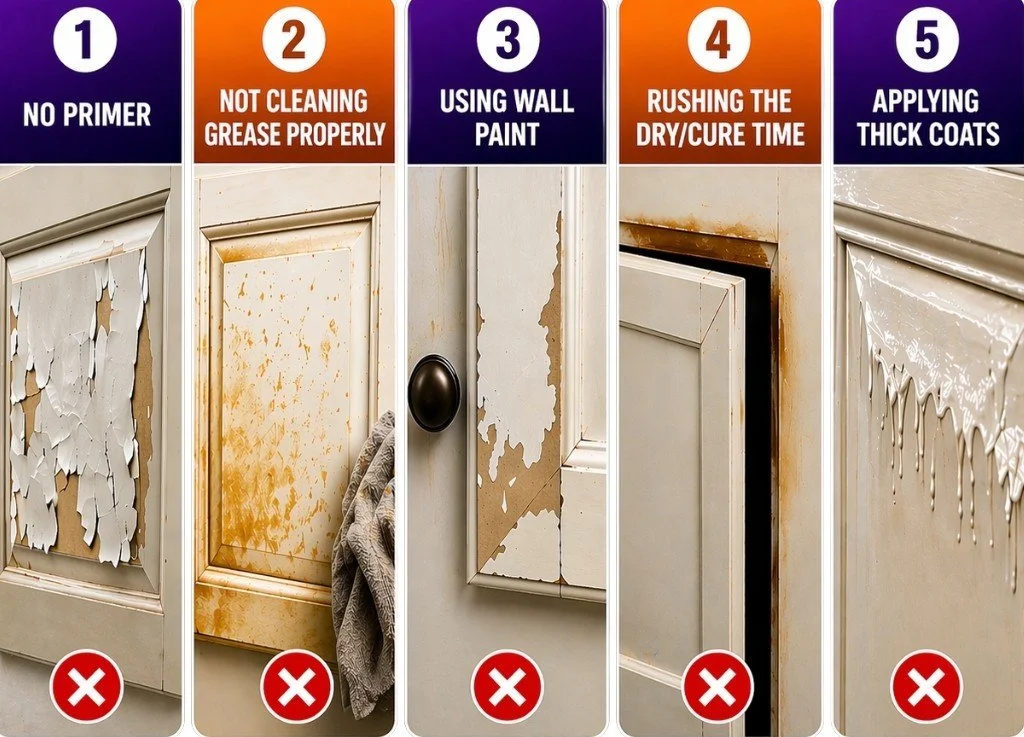
No Primer : Paint won't stick to the flat surface of cabinets without a special bonding primer. Eventually, it will come off in sheets.
Using Wall Paint : Even imperceptible layers of cooking oil keep paint from sticking when you paint over grease. The paint won't really cling if the surface isn't adequately cleaned of grease.
Using Wall Paint : Regular latex paint for walls is too soft for places with a lot of foot traffic. It stays tacky, which makes doors stick together and the finish wear off around the knobs.
Rushing the Dry/Cure Time : Paint seems dry to the touch in a few hours, but it takes days to cure (harden). If you hang doors again too soon, the edges will cling and peel right away.
Applying Thick Coats : Thick coats are likely to leak and droop. One thick, uneven coat is not as powerful or long-lasting as several thin, regulated coatings.
When to Repaint vs. Repair
You don't necessarily need to paint your kitchen all at once to make it seem better. A focused repair is sometimes all that's needed. But there are clear symptoms that your cabinets need a thorough makeover to keep them from falling apart.
| Condition | Solution |
|---|---|
| Small chips | Touch-up paint |
| Minor scratches | Polish or fix |
| Major peeling | Full repaint |
When to Do a Full Repaint:
If paint is peeling off in big sheets, the initial bond has broken. A touch-up will only disguise the fault for a short time while the remainder of the finish keeps coming off.
If the color has changed a lot or isn't uniform anymore, spot-fixing will make it seem "patchy." A new coat makes everything look the same again.
If the finish seems rough or gritty, it signifies the protective coating is gone. This makes the wood porous, which means it can soak up spills and stains.
Significant Wear: If the cabinets seem worn out or "lived-in" on a lot of doors and drawers, the best approach to make the whole room look new again is to repaint them all
Cost vs. Lifespan: Is It a Sound Investment?
Painting your kitchen cabinets is often a superior alternative to a full replacement, balancing modern aesthetics with significant financial efficiency.
Why Repainting Is a Strategic Investment:
Great Value : Replacing cabinets is one of the more costly parts of a kitchen makeover. Professional painting can make your home seem "like new" for a lot less money, frequently saving you thousands on supplies and labour.
Significant Return on Investment : Kitchen improvements are a big reason why house values go up; therefore, they are a good investment. A high-quality finish instantly updates the room and is one of the best ways to get a return on investment for home renovation projects.
Long-Term Durability : When done using industrial-grade cabinet enamels, this method leaves a finish that is strong and looks like it came from the factory. A well-done coat may last 8 to 10 years without losing its shape or look. This makes it a good option for a small repair or a full-scale refurbishment.
Sustainable Renovation : Refinishing uses high-quality cabinets that are already there instead of throwing them away. It is a decision that is good for the environment because it cuts down on building waste and gives a modern look.
Recommended Read: Cost to Paint Kitchen Cabinet
Final Thought
In the end, the paint on your kitchen cabinets can last anywhere from five to 10 years, depending on how well you prepare, choose an industrial-grade product, and keep up with regular maintenance. You can make a strong barrier that can handle heat, moisture, and heavy use every day by using professional-grade primers and enamels and following the right curing periods.
If you think of your cabinets as a high-traffic investment instead of just a regular wall surface, a high-quality finish will keep its shape and look good for ten years or more.
FAQs: How Long Does Cabinet Paint Last?
-
In most homes, cabinet paint lasts 5 to 8 years. With good care and high-quality work, it can reach 10 years. Busy kitchens may see wear a bit earlier.
-
The biggest factor is preparation.
Proper cleaning
Sanding
Priming
If these steps are done right, the paint sticks better and lasts longer.
-
Chipping can start in 2–3 years with poor-quality work.
With good materials and proper prep, it may take 6–8 years to show signs. -
Painted cabinets last 5–10 years, while factory finishes or laminates may last longer. However, painted cabinets are easier and cheaper to refresh.
-
The full process usually takes 5 to 10 days, including prep, painting, and drying. Full curing takes a bit longer.